Anxiety and panic attacks
Anxious PeopleAnxiety and panic attacks in the novel are not treated as an abstract diagnosis so much as a distressing experience that can be difficult to recognize, explain, or share. Through Nadia’s work as a psychologist and Zara’s guarded disclosures, the story follows the distance between an inward crisis and the words that might make it bearable: people may fear they are dying, search for a physical explanation, and still find it hard to tell others what is wrong.
An invisible and difficult-to-name distress
Nadia acknowledges that she never found a definitive explanation for panic attacks. Her account instead describes the confusion around them: people can go for months struggling to breathe and visiting doctors because they suspect a problem with their lungs, while the distress they experience remains difficult to name. The body’s alarm feels convincing, and the mind can insist that death is imminent even when the lungs are not the source of the problem. The novel presents that mismatch not as proof that the suffering is unreal, but as one reason it can be so hard to understand and communicate.
The difficulty is social as well as personal. Nadia observes that people may receive more sympathy at work by claiming to be hungover than by saying they are suffering from anxiety. In her account, the trouble is not that distress is rare, but that many people living with it do not know what to call it, or do not feel able to say so. Anxiety remains invisible to others even as it presses heavily on the person experiencing it.
Nadia’s experience and her work
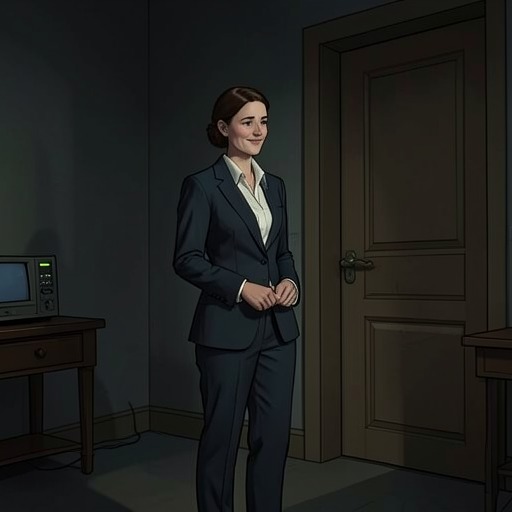
Nadia’s understanding of people in acute distress is rooted in her own past. After being rescued from The bridge, she did not return there; instead, she spent years trying to understand how her experience differed from Man on the bridge’s. That question shaped her choice of profession and her life as a psychologist. She came to work with people whose pain made them feel close to an edge, meeting them as someone who had herself faced a crisis and believed there was another way down.
Her experience does not make her anxiety disappear. Nadia has to find ways to cope with the loneliness and distress she once associated with what was missing from her reflection. She comes to think of coping not as a clean escape from anxiety but as learning to carry it. That perspective informs her belief that people should be treated kindly, including those who are difficult, because the weight they bear may not be visible. Her work joins personal survival to a continuing effort to understand other people’s suffering.
Zara’s fear and delayed disclosure
Zara’s connection to Nadia began long before she became her patient. One week after Man on the bridge died, Zara saw Nadia climb onto the same railing and watched a boy rescue her. Zara remained hidden and still while Nadia was taken to hospital. Afterward, she found Nadia’s wallet and identification, and for ten years followed Nadia’s education and career from a distance, afraid to approach her. She also carried the dead man’s letter in her handbag and left its envelope unopened.
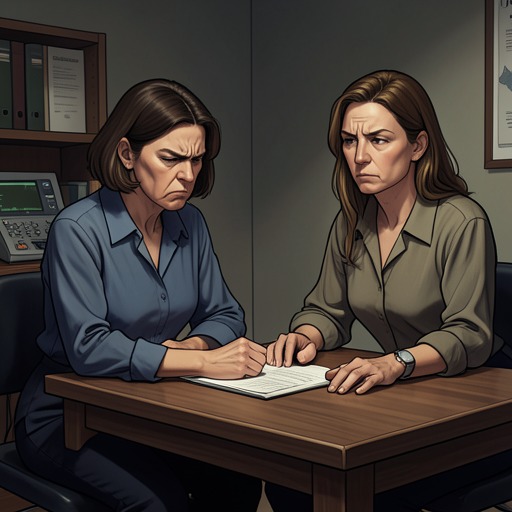
That history gives Zara’s later anxiety a specific shape. She fears that returning to The bridge or learning the truth about herself might lead her to jump. She believes that she bears guilt and is a bad person, yet cannot bring herself to open the letter that might address that fear. When she finally meets Nadia in the psychologist’s office, she still struggles to speak plainly. Her gaze repeatedly approaches but avoids Nadia’s eyes; after their conversation, her eyes close and tears begin to fall. These actions show the strain of disclosure without turning it into an easy or immediate breakthrough.
Zara eventually lets the envelope slip from her hand, allowing Nadia to pick it up. She wants Nadia to read the letter aloud and, when fear overwhelms her, to stop her from jumping herself. The wish gives the letter a double significance: it is a message connected to an earlier death, and a way for Zara to ask for help with the danger she fears in her own future. She manages only to begin addressing Nadia before Nadia gently opens the envelope.
Conversation, humor, and recognition
The exchange about panic attacks matters partly because it does not produce a neat definition. Nadia admits that she has no better explanation now than she had when Zara first asked. Instead, she offers what she has learned: talking about anxiety can help, even when workplaces and everyday encounters make it difficult to admit. Her words bring her professional knowledge into contact with her own experience, without suggesting that either gives her complete command of the subject.
Humor makes room for that contact. After Nadia speaks about anxiety and the brain’s false alarm, Zara adds a qualification to Nadia’s reassurance that they will not die. Nadia laughs, and Zara answers with another joke. The exchange does not erase Zara’s fear: her trembling expression and diverted gaze remain visible. But laughter allows the two women to share a moment before Zara releases the envelope. In the scene, humor is neither a cure nor a denial; it is part of how they manage to stay together in a difficult conversation.
Support, grief, and the limits of rescue
The novel places this encounter within a wider understanding of what help can and cannot accomplish. Jack’s mother taught him that people cannot change the whole world, but can help one person at a time and save those they can. Jack has been unable to save his sister or Man on the bridge, and his dreams return to the bridge in different forms from Jim’s. This history gives the novel’s emphasis on speaking and listening a modest scale: support cannot undo loss or guarantee that anyone will be safe, but it can offer company and a next step.
Nadia carries that approach into an annual summer camp for children who have lost a family member to suicide. She goes to listen, talk, and laugh with them, in a setting built around the recognition that they should not have to carry guilt, shame, and silence alone. The camp extends the novel’s account of anxiety beyond the consulting room: being heard does not make distress vanish, but it can interrupt isolation. In Nadia and Zara’s meeting, as in the work with the children, the possibility of help begins not with certainty but with the decision to stay present and speak.